

VPN vs Proxy: Which One Actually Keeps You Safe Online?
- Oct 6, 2025
- 7 min read

They both hide your IP, but don’t let that fool you. A VPN and a proxy might seem like twins at first glance, but under the hood, they couldn’t be more different.
A VPN and proxy both route your traffic through a different server to hide your IP address, but only a VPN encrypts your internet connection for full security and privacy.
With surveillance, geo-blocks, and tracking on the rise, knowing the difference between a VPN and a proxy is essential. Pick the wrong tool, and your data could be exposed, so which one truly protects you, and when should you use each?
What You Will Learn in This Article
What Is a Proxy Server and Why It’s Not Really Private
Let’s start simple. A proxy server is like a digital middleman, it takes your internet request, sends it on your behalf, and then returns the result.
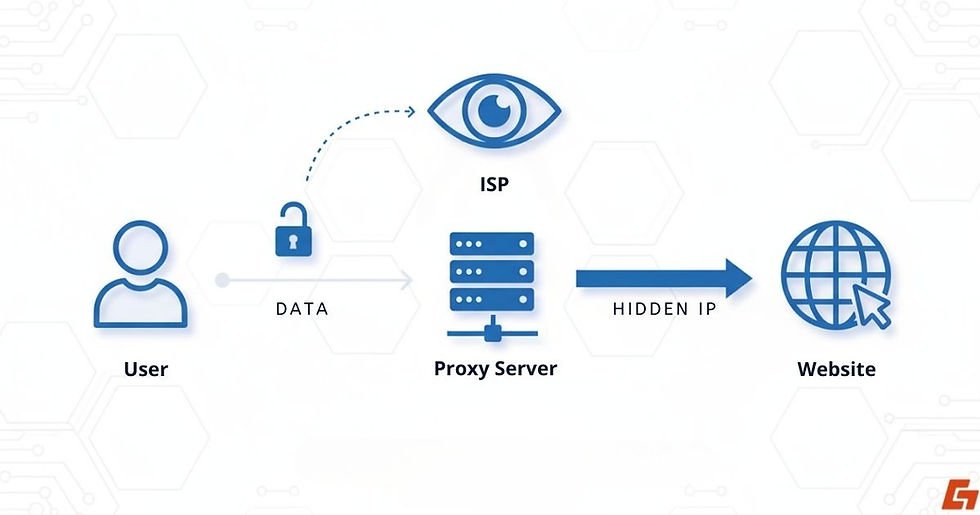
To the website you're visiting, it looks like the proxy is the one making the request, not you. That means your IP address stays hidden, and the site sees only the proxy’s IP.
Why Proxies Hide Your IP but Not Your Data
Most proxies don’t encrypt your connection. Your ISP can still see what you’re doing, and so can anyone snooping on the network. You’re basically wearing a mask without locking the door.
When a Proxy Might Be Just Enough
Still, proxies have their place. They're often used to bypass content restrictions, like checking sports scores from another region or getting around a school firewall.
They're also fast, because they don’t slow things down with encryption. But again, that speed comes at a cost: security.
And while proxies and VPNs are often lumped together, they operate on very different levels. We'll get to that.
What Makes a VPN More Secure Than a Proxy?
You’ve probably heard the term VPN thrown around, especially if you’ve ever looked into online privacy tools. A VPN (Virtual Private Network) goes several steps further than a proxy.

Instead of just routing your request through another server, a VPN creates an encrypted tunnel between your device and the VPN server. Everything, from your browser activity to the apps you use, is scrambled into unreadable data while in transit.
So even if someone intercepts your connection (say, on public Wi-Fi), all they’d see is gibberish.
VPNs Protect All Your Apps, Not Just Your Browser
Unlike proxies, which usually only cover individual apps or browsers, a VPN works system-wide.
It cloaks your entire internet connection, which makes it a better option for people who want full privacy, not just in one browser tab, but across everything they do online.
VPN vs Proxy: Privacy Armor vs Digital Mask
So to recap: VPN and proxy both hide your IP address, but only one of them shields your data from prying eyes.
VPN vs Proxy Comparison Table: Security, Speed, and More
Feature | VPN | Proxy |
Encryption | Yes (end-to-end) | No |
IP masking | Yes | Yes |
Speed | Slightly slower (encrypted) | Usually faster |
Security | High | Very low |
Covers whole device | Yes (all apps) | Usually browser only |
Bypasses geo-blocks | Yes (more reliable) | Yes (for basic sites) |
Hides from your ISP | Yes | No |
The Bottom Line: Different Tools for Different Threats
You can probably guess the trend here: VPN and proxy tools are built for very different jobs.
A VPN is like a secure armored van, your data gets inside, locks the door, and drives safely to its destination.
A proxy? It’s more like a courier in a disguise: quick and stealthy, but exposed to everything along the route.
That doesn’t make proxies useless. But it does mean you need to know when they’re appropriate and when you’re better off investing in something stronger.
When a Proxy Is the Right Call and When It’s Not
Now, despite its flaws, a proxy isn’t completely useless. Far from it. There are actually a few situations where a proxy is the perfect lightweight tool.

Say you’re trying to visit a blocked news site while connected to your school or office network.
Or maybe you just want to check a region-locked sports score while pretending to browse spreadsheets. That’s proxy territory.
Quick Tasks Where Proxies Get the Job Done
You’re doing basic location spoofing
You don’t care about encryption or data privacy
You only need coverage inside a single app or browser
You just need to get around light restrictions
Great for Access, Not for Anonymity
In short, proxies are like plastic masks, decent at hiding your face but not much help in a real fight. You might use one to quickly peek behind a geo-blocked site, but if you’re dealing with sensitive tasks? You’ll want more than that.
And remember, this only works well if you trust the proxy server. Many public proxies aren’t exactly built with your privacy in mind. But we’ll get to that danger zone in a bit.
When You Need a VPN Instead of a Proxy
Let’s flip it, because a VPN and proxy aren’t interchangeable, especially when you care about your data.

If you’re on public Wi-Fi at a hotel or café, your information is exposed. Logins, emails, browsing history, it’s all up for grabs unless you encrypt it.
That’s where VPNs step in, bringing full encryption and coverage without compromise.
Top VPN Use Cases That Go Beyond Browsing
Protecting sensitive data on public networks
Streaming Netflix, Hulu, or BBC iPlayer across regions
Accessing restricted content in countries with censorship
Torrenting or peer-to-peer file sharing securely
Securing everything on your device, not just one browser tab
Why VPNs Offer Peace of Mind, Not Just Protection
And let’s not ignore peace of mind. With a VPN, your ISP can’t track your browsing, advertisers have a harder time profiling you, and your real IP stays buried.
So while a VPN and proxy both give you some level of anonymity, a VPN goes the distance, especially when the stakes are high.
Is a VPN Slower Than a Proxy? Not Necessarily
Sure, VPNs might be a tiny bit slower than a raw proxy because of encryption, but unless you're using a bargain-bin service, the difference is barely noticeable these days.
Choose a provider with fast, optimized servers, and you’re golden.
VPN vs Proxy Myths That Keep People Unprotected

“Proxies are free, so they’re better.”
It’s true that a lot of proxies cost nothing. But you get what you pay for. Free proxies are often slow, unreliable, or worse, set up by people who want to log and sell your data. The “free” part usually comes with strings.
“VPNs are slow.”
They can be, but only if you're using a bad one. Premium VPNs invest heavily in infrastructure to make sure their servers are fast. You might lose a bit of speed, but you’ll gain serious security.
“Using a proxy means I’m anonymous.”
Not quite. While a proxy hides your IP, it doesn’t touch your data. Your ISP can still see everything, and unsecured sites can still track you through cookies or fingerprinting. It’s more disguise than shield.
It’s About What Happens Behind the Scenes
So when it comes to understanding the difference between VPN and proxy, it's not just about the surface, it’s what happens under the hood.
The Hidden Risks of Using Free Proxies
This is where things get sketchy. While a free proxy might seem like a no-brainer “Why pay when I can just route through this random server?”, the reality is a bit darker.

What Your “Free” Proxy Might Be Doing Behind Your Back
Here’s the deal: many free proxies log your data. And they don’t do it discreetly, either. Some inject ads into your web pages. Others silently sell your browsing history to advertisers or data brokers. A few have even been caught spreading malware.
Still Exposed: Why Free Proxies Leave You Wide Open
And since there's no encryption involved, your ISP still sees everything you do, just like you weren't using anything at all.
Trusting Free Proxies Is Like Playing Roulette With Your Data
Let’s be honest, if you’re trusting a completely unknown server with your traffic, hoping it’s safe because it has “proxy” in the name... that’s rolling the dice. You’re handing over the keys to your online activity with no idea who’s on the other side.
So yes, a VPN and proxy might both hide your IP. But one of them might be stealing everything else.
Streaming and Smartphones: Why VPNs Beat Proxies Every Time
Here’s where things get even more practical. If you’re using your phone, smart TV, or tablet, proxies fall flat. Most proxies only work within specific browsers. They won’t help you when you open your Netflix app or stream from a smart device.

From Phones to Smart TVs: VPNs Go the Distance
VPNs, on the other hand, are built for mobility. Whether you’re on Android, iOS, or using a router-level VPN to protect your entire household, VPNs work system-wide.
Netflix vs Proxies: Guess Who Wins?
And if you’ve ever tried streaming geo-blocked content, you’ve probably noticed something else: proxies get blocked, a lot. Netflix, Disney+, Hulu, they all aggressively detect and reject proxy IPs.
But a good VPN? It has dedicated streaming servers designed to slip past those firewalls without breaking a sweat.
Want to Stream International Content? Proxy’s Not Enough
So if you're binge-watching from Poland and want to watch U.S. content? Proxy’s not going to cut it. But with the right VPN, you’re back in business.
Mobile Security and Streaming Access? VPN All the Way
In short, if you're serious about mobile security or entertainment access, the VPN vs proxy debate isn’t even close.
One Hides You, One Truly Protects You
We’ve broken down how a VPN and proxy stack up, one’s a full-body shield, the other a lightweight mask. They both have their place, but their differences in privacy, security, and function are too big to ignore.
At the end of the day, it’s not just about hiding your IP, it’s about knowing who can still see what you’re doing. That shift in awareness? It’s what separates casual users from truly protected ones.
So next time you're about to connect, ask yourself: do you just want to look private, or actually be private?


Comments